
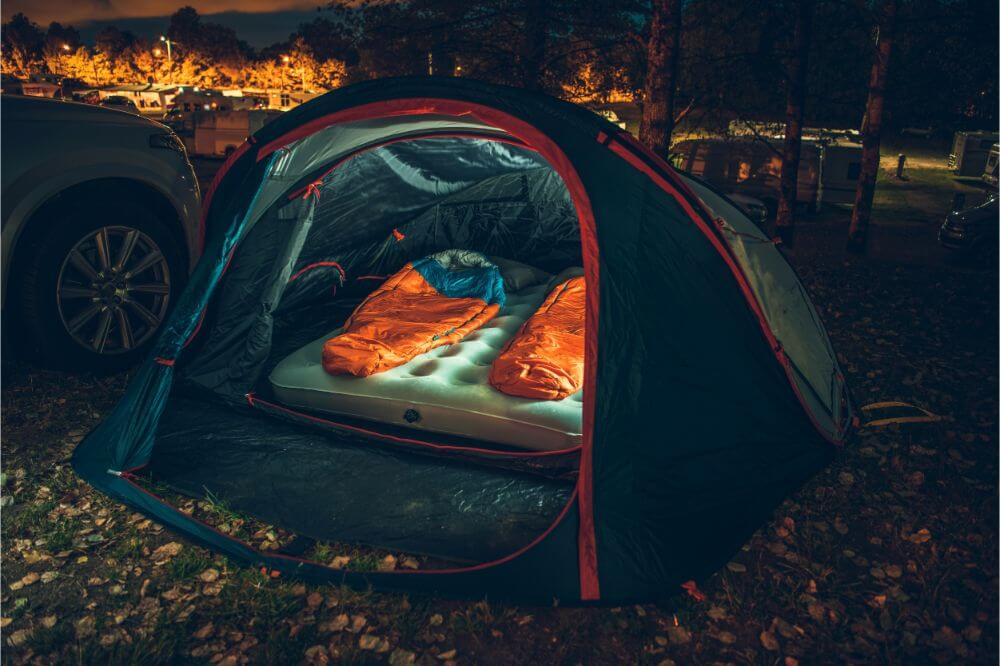
Not everyone dares to go camping in winter. But what would happen if it comes to the push and you are forced to spend a night or two or even longer outside in a tent in winter? What are you going to do to keep you and maybe your family warm and cozy during those nights? It will not harm you to know how to insulate your tent from the winter cold, even if you don’t plan to camp in winter — you may be camping in fall or spring, and a random cold night takes you.
You and your family will be very happy if you know how to keep them and yourself warm. There are some helpful ways of insulating your tent for winter camping. And if you are thinking of becoming one of those brave souls to start camping in the winter, have a look at the instant setup 4 season tent from Dessert&Fox.
They say it is better to go smaller to keep you warm. But what about if you have an extended family, and if you are one of those people who believe the family does everything together? You should look for the bigger Automatic pop-up 4 season tent.
Work With What You Have
For starters, you have your tent, and if you are not a winter camper, then you will probably have only a 3-season tent or even a 2-season tent. The function of a tent is to keep you dry and to keep you out of the wind, and your sleeping bag is there to keep you warm, right? Alas, it is not that simple.
If you do not have an Arctic weather tent that is a 5-season tent, you will need insulation to keep out the cold. If you have a 2- or 3-season tent, you’re going to have to winterize it. There are three things you want to keep outside your tent, and they are moisture, wind, and cold. Then you will want to keep the heat inside. That’s when you are going to insulate your 2 or 3 season tent.
Let’s start with floor covering, and that said, we will have a look at what you can use in an emergency as well as out in the field. You want to insulate the floor so no water or any moisture can soak in from the ground or from under the tent. Cold comes with moisture, and you don’t want that when you aim to keep the cold out.
How to Insulate the Floor
To insulate the floor, you’re going to need some floor covering. If you have a tent with the floor attached to the sides, you should start by getting yourself an insulated carpet. But in the case of emergencies, use a tarp sheet, which is a heavy waterproof cloth.
Tarps are the most popular floor covering for tents among campers and backpackers. It is not 100 percent waterproof, but it is a good starting point for keeping moisture out and providing some insulation from the bottom.
There is also a very cheap option, and that is a plain, cheap cardboard box that will help if you have nothing else, and you want to pack a few layers of them at the most bottom of the floor and then cover that with some canvas groundsheet or tarp sheet. It all depends on the situation you find yourself in. And if you do go camping, no matter when, it is always better to go prepared.
A standard foam mat is also a great way to put some insulation between you and the floor. If you are a solo camper, the principle of ‘the smaller, the better’ will apply to you, and your needs will be minimal. As a one-person camper, you may look to get a one-person 3-season backpacking tent like the one supplied by GeerTop.

How to Insulate the Tent’s Walls
The Outside Walls of the Tent
There are a couple of ways to insulate the walls of the tent, ranging from bubble plastic and plastic wrap or plain plastic sheet attached with spray-on adhesive to the outside of the tent, to reflective foils attached to the inside. And then there is always the natural way at the ground level to cover the bottom part of your tent with dry leaves. It is quite easy to insulate the outside of the tent with the plastic wrap or sheet.
Air is a good insulator, so bubble wrap will help a lot to prevent the cold from coming in and is regularly used in the insulating industry. It is, in fact, one of the more popular forms of insulation.
To put the plastic around the outside of your tent, if you are not using plastic wrap, you will need some spray-on adhesive, which you can apply quickly and easily. Spray a manageable section of the outside walls and apply the plastic, rubbing it onto the fabric of the tent. Then you keep on doing it strip after strip until you have covered the whole tent.
The Insider Walls of the Tent
For the inside walls, you are going to need some reflective foil sheets or some of those emergency blankets or space blankets. You are going to do exactly the same thing you did on the outside with the plastic and apply this foil blanket and stick it to the inside wall of the tent with the foil side facing the inside of the tent — you apply the spray-on adhesive to the fabric of the tent wall and stick the space blanket onto the wall by rubbing it until it stays attached to the wall.
This reflective foil will reflect the heat into the inner space of your tent. You may apply this to the whole inner wall up to the rooftops or just the walls if it is not that cold outside. You may even cover the door section of your tent on the inside with the reflective foil but do not cover the zippers. That way, you are just using your body heat to keep you warm, which is around 100 watts of heat.
Leave Some Airflow Space
You will need to leave some space for fresh air to come in and stale air to go out. The space where you enter your tent is ample for that. As said before, you may cover the door with the inside insulation, but you need to leave some space at the bottom and the top for fresh airflow. The chances of you not getting enough fresh air is slim, but you want to make sure there is space for ventilation.
Conclusion
It may not seem obvious, but your clothing and your sleeping bag are also part of your insulation system. So you would want to make sure your sleeping bag will keep you warm.
With personal clothing, you also would want to have dry and warm clothes to wear and don’t put your head inside the sleeping bag. Your hot breath will cause humidity, and it could leave you even colder. Speaking of staying dry, in the case of heavy rains or flooding, you need to keep out of the water, and for that, you could use one of those Bug Net hammocks.
And if you are on a camping trip with heavy rains, the Outdoor Camping Car Tail Tent will come in handy in case of rain. So it is always good to be prepared if possible for all events.